Learning isn’t what it used to be. For decades, the formula was simple: sit at a desk, open a heavy textbook, memorize the facts, and write them down on a test. But over the last few years, that rigid routine has cracked wide open.
As preservice teachers at INSPT-UTN in Argentina, we are witnessing firsthand how learning has broken free from the traditional four walls of the classroom. Today, it is a dynamic, collaborative, and deeply interactive journey where students aren't just memorizing information—they are constructing their own identities and making sense of the world through multiple channels at once.
The Reality of Today's World: More Than Just Words
Look around: today’s students don't consume information in a single format. They live in a world of videos, audio, images, interactive media, and text all swirling together. Because of this, education can't keep relying solely on the old-school, text-only playbook.
This is where multimodal learning comes in. It may sound like a fancy term, but the idea is quite simple: we learn better when information is presented through different modes of communication—such as visuals, sound, language, and movement—rather than through words alone.
Our brains actually experience less cognitive overload when information hits us through complementary verbal and visual channels at the same time. By giving students multiple entry points to a concept, a lesson instantly becomes more inclusive, accessible, and engaging for everyone.
Putting Theory into Practice: “Aulas que dialogan”
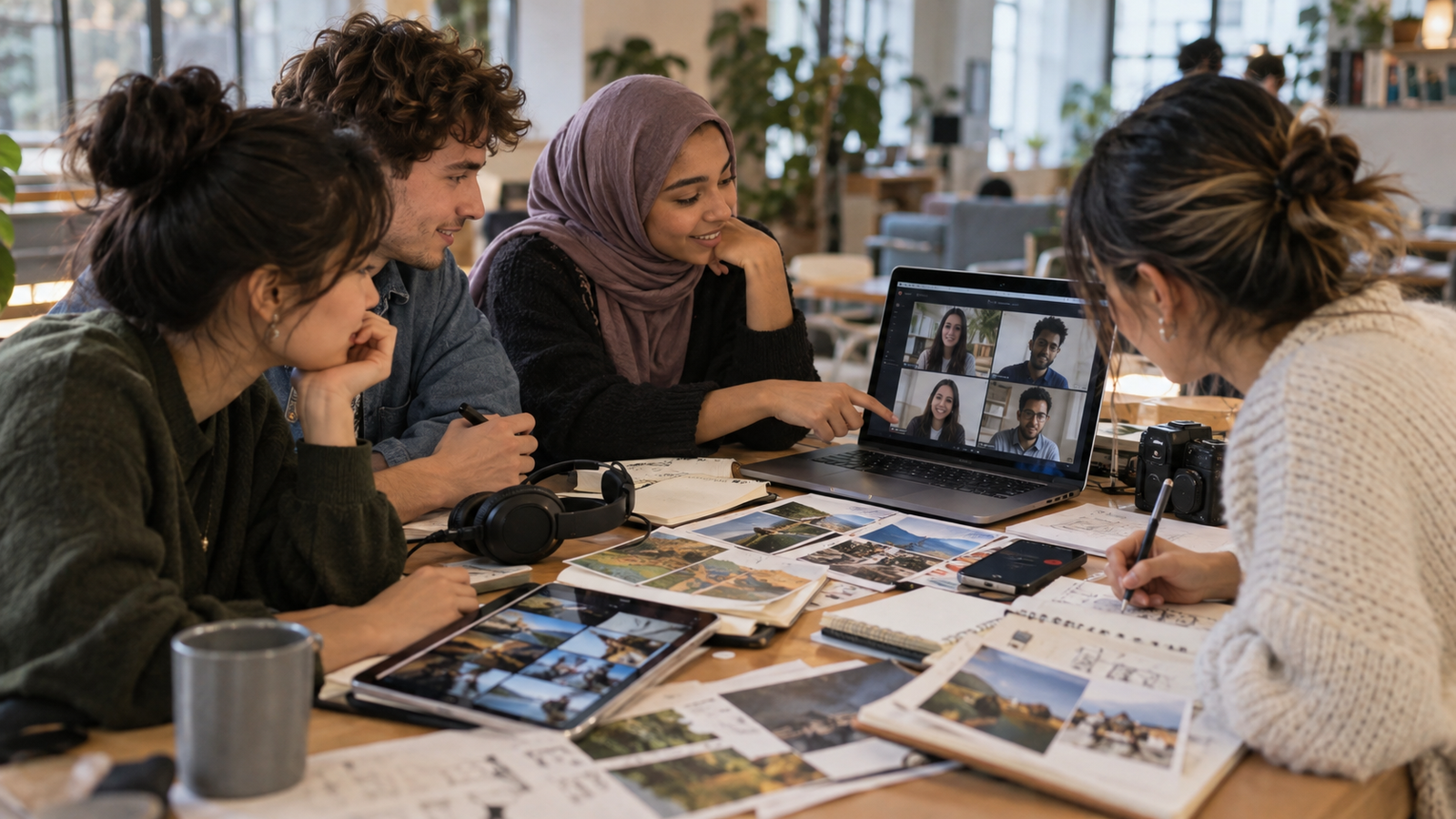
We didn't just study this approach in a lecture; we actually lived it. Under the guidance of Professor Marina Falasca, our class took part in a virtual exchange project called Aulas que dialogan: Historias Multimediales entre Países (Dialoguing Classrooms: Multimedia Stories Across Countries).
Working in mixed international teams with students from the Universidad Nacional (UNA) in Costa Rica, our mission was to create and share multimodal, bilingual digital stories.
We had to blend text, images, music, and audio voiceovers to bring our projects to life. But it wasn't just a technical exercise. We were weaving together cultural elements, values, and traditions from both Argentina and Costa Rica. As we designed these stories, we had to think hard about:
Our audience: Who was watching, and how would they receive it?
Media synergy: Which combinations of sound and image would make the story pop?
Bilingual strategies: How could we use both languages effectively for diverse classrooms?
The project completely transformed our understanding of a "story." By stepping away from standard essays and moving into multimedia creation, the learning process became alive, global, and collaborative.
What This Means for the Future of Learning
If this virtual exchange proved anything, it’s that the future of education is interconnected, global, and highly digital. We can no longer treat traditional text as the only valid way to show intelligence or build knowledge.
Experiences like “Aulas que dialogan” prove that when students are allowed to use multiple modes of communication, it unlocks their creativity, builds deep intercultural empathy, and sharpens their critical thinking.
As future teachers, this project completely rewired how we view our future jobs. Our role is no longer to just stand at the front of the room and hand out facts. Instead, our job is to be guides. We need to help students navigate complex digital spaces, teach them how to critically interpret the media hitting their screens, and empower them to become active, responsible creators of their own content.

Join the Conversation
Share a reflection, question, or idea sparked by this article. Please keep the conversation respectful and constructive.